
How to Set Up a Portable Hand Washing Station Without Permanent Plumbing
Oct 19th 2026
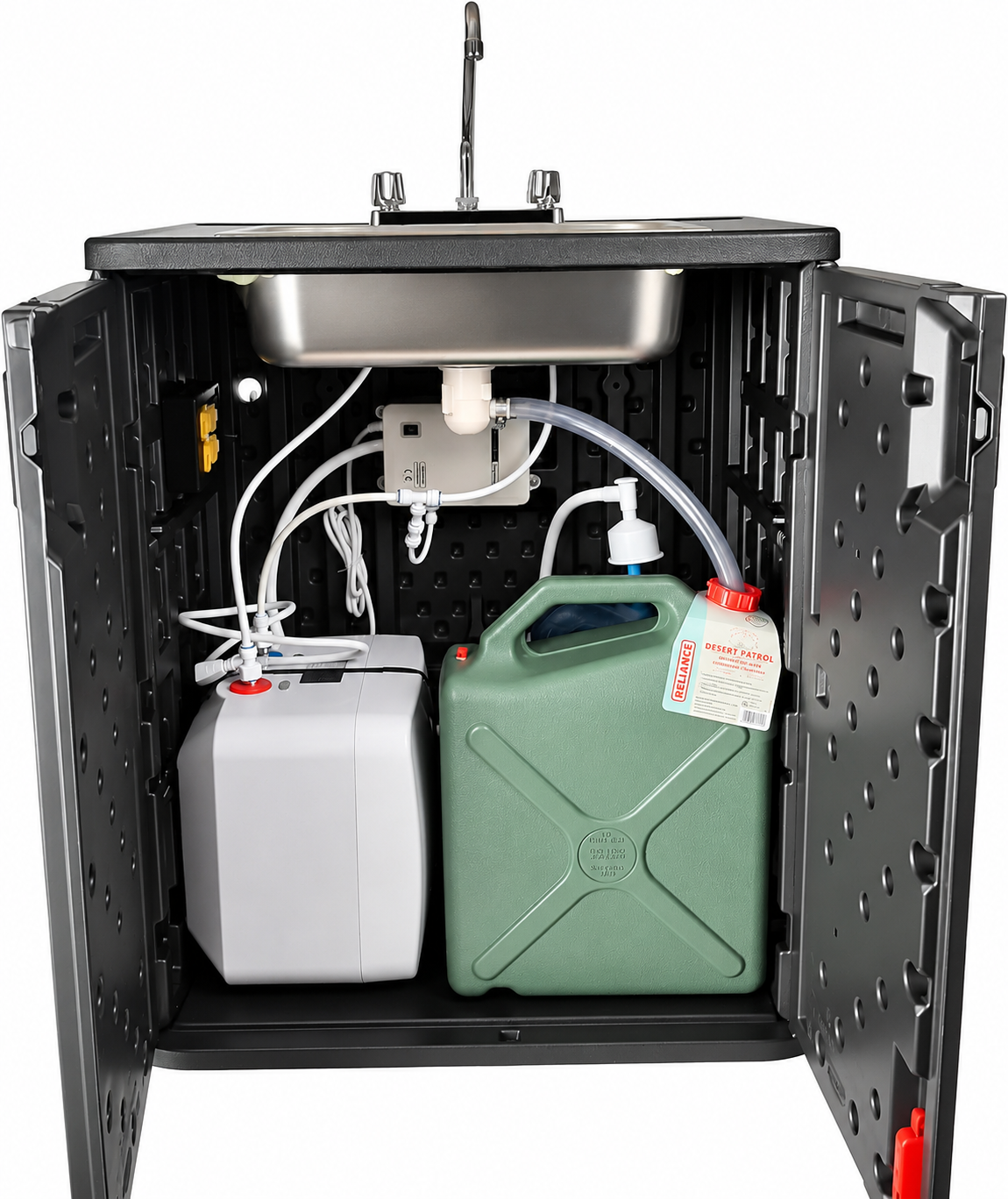
A portable hand washing station provides running water without permanent plumbing connections. Self-contained models use onboard freshwater and wastewater tanks, along with an electric pump to supply the faucet.
This guide explains how to prepare and operate our portable handwashing stations, including assembly, water filling, startup checks, and shutdown. Specific procedures vary by model.
How Do You Set Up a Portable Hand Washing Station?
A self-contained handwashing sink can generally be prepared for use in six steps:
- Choose a suitable location. Position the station on a stable, level surface near an appropriate electrical outlet.
- Complete the required assembly. Install any components supplied separately, following the product instructions.
- Fill the freshwater tank. Add potable water and check that the supply and wastewater containers are properly connected.
- Connect electrical power. Use an outlet that meets the unit's specifications.
- Test the faucet and drainage. Confirm that water flows correctly and drains into the wastewater tank.
- Prepare for use. Stock handwashing supplies and check that the station is operating properly.
Step 1: Choose a Suitable Location
Place the station on a firm, level surface where users can comfortably access the sink.
The location should provide:
- Enough clearance to open cabinet doors and access water tanks.
- A compatible electrical outlet within safe reach.
- Sufficient space for users without obstructing surrounding work areas.
- Conditions suitable for the model's intended indoor or outdoor use.
If the station has locking casters, secure them before operation.
For outdoor applications, avoid locations where standing water or unsuitable weather conditions could affect the equipment.
Step 2: Complete the Required Assembly
Most of our portable handwashing stations arrive with their internal plumbing and electrical components already installed.
For our resin-cabinet Models 35-0091 and 35-0092, the main assembly task is attaching the faucet spout.
Other configurations, including select Pinnacle models, may require installing faucet handles, cabinet hardware, or quick-connect fittings.
Check the components included with your station and follow the supplied instructions to complete any required assembly.
Step 3: Fill the Freshwater Tank
Our portable handwashing stations feature 5-gallon freshwater tanks.
To prepare the water supply:
- Locate the freshwater container inside the cabinet.
- Fill it with potable water according to the manufacturer's instructions.
- Secure the tank and verify that its supply connection is properly attached.
- Confirm that the wastewater container is empty, positioned correctly, and connected to the drain.
Keep the water supply protected from contamination while filling and handling the tank.
Step 4: Connect the Station to Electrical Power
Electrical requirements vary by model. Our resin-cabinet Models 35-0091 and 35-0092 operate on 110V/15A service, while Premier and Pinnacle configurations include 20A power cords and require compatible electrical service.
For safe operation:
- Use an outlet and circuit that meet the model's electrical requirements.
- Inspect the power cord and plug for damage.
- Provide GFCI protection as required by the manufacturer and applicable electrical codes.
- Keep electrical connections protected from water exposure.
For heated models, complete the manufacturer's required filling, priming, and startup procedures before activating the heater. Do not energize the heater until the water supply is ready according to the product instructions.
Step 5: Test the Water Flow and Drainage
Once the station has been prepared and powered according to its instructions, check that the water system functions correctly.
Open the faucet and allow water to flow, following any required pump-priming procedure.
Inspect the following:
- Faucet operation: Water should flow consistently without unexpected interruptions.
- Supply connections: Accessible hoses, fittings, and tank connections should be free of leaks.
- Drainage: Used water should flow from the basin into the wastewater container.
- Water temperature: If the unit has a heater, verify that the water reaches the temperature required for its intended application.
If the pump does not deliver water or the sink develops a leak, stop operation and consult the product instructions before troubleshooting.
Step 6: Prepare the Station for Use
Once the faucet and drainage are working correctly, stock the required handwashing supplies, including soap and an appropriate hand-drying method.
During operation, monitor the freshwater and wastewater levels to prevent interruptions. Refill or service the containers as necessary, using approved water sources and disposal methods.
When using the station for regulated food-service activities, follow applicable health department requirements for handwashing facilities.
How Do You Shut Down a Portable Hand Washing Station?
When the station is no longer needed, follow the manufacturer's shutdown instructions.
General end-of-use procedures include:
- Turn off the faucet and any applicable equipment controls.
- Disconnect electrical power safely after completing any required heater shutdown procedure.
- Empty the wastewater tank at an approved sanitary disposal location. If any water remains in the freshwater tank, empty it according to the manufacturer's instructions.
- Clean the basin and other surfaces as needed.
- Secure the water containers and cabinet before moving or storing the unit.
For extended storage, follow the model's draining, cleaning, and winterization instructions. Water left inside the pump, heater, or plumbing lines may cause damage if exposed to freezing temperatures.
Set Up Handwashing Without Permanent Plumbing
At The USA Trailer Store, we offer self-contained portable handwashing stations for temporary and commercial applications. Explore our available models to compare water-temperature options, electrical requirements, and configurations suited to different applications.