
How to Clean and Maintain a Portable Hand Washing Station
Posted by The USA Trailer on Nov 3rd 2026
Regular cleaning and maintenance help keep a portable hand washing station sanitary, functional, and ready for use. Routine care includes cleaning the basin and cabinet, maintaining freshwater and wastewater tanks, inspecting plumbing connections, and protecting internal components during storage.
Our portable handwashing stations use different materials depending on the model, including stainless steel, heavy-duty resin, ABS, and laminate. Proper cleaning methods matter because abrasive cleaners can scratch stainless steel, strong solvents can damage resin or ABS surfaces, and excessive moisture can deteriorate laminate edges. Pumps and water heaters also have model-specific maintenance requirements.
What Daily Maintenance Does a Portable Hand Washing Station Need?
Regular checks help operators identify issues before they interrupt handwashing access.
During normal use, check the following:
- Freshwater supply: Make sure the tank contains enough clean, potable water for continued operation.
- Wastewater level: Empty the holding tank before it reaches capacity.
- Water system: Check that the faucet and drainage are functioning normally.
- Handwashing supplies: Replenish soap and hand-drying materials as needed.
- Equipment condition: Look for visible damage or unusual operation.
Perform these checks before use and periodically throughout the day. Clean the basin and frequently touched surfaces at the end of the operating day and whenever visibly soiled. High-use stations may require more frequent cleaning and tank servicing.
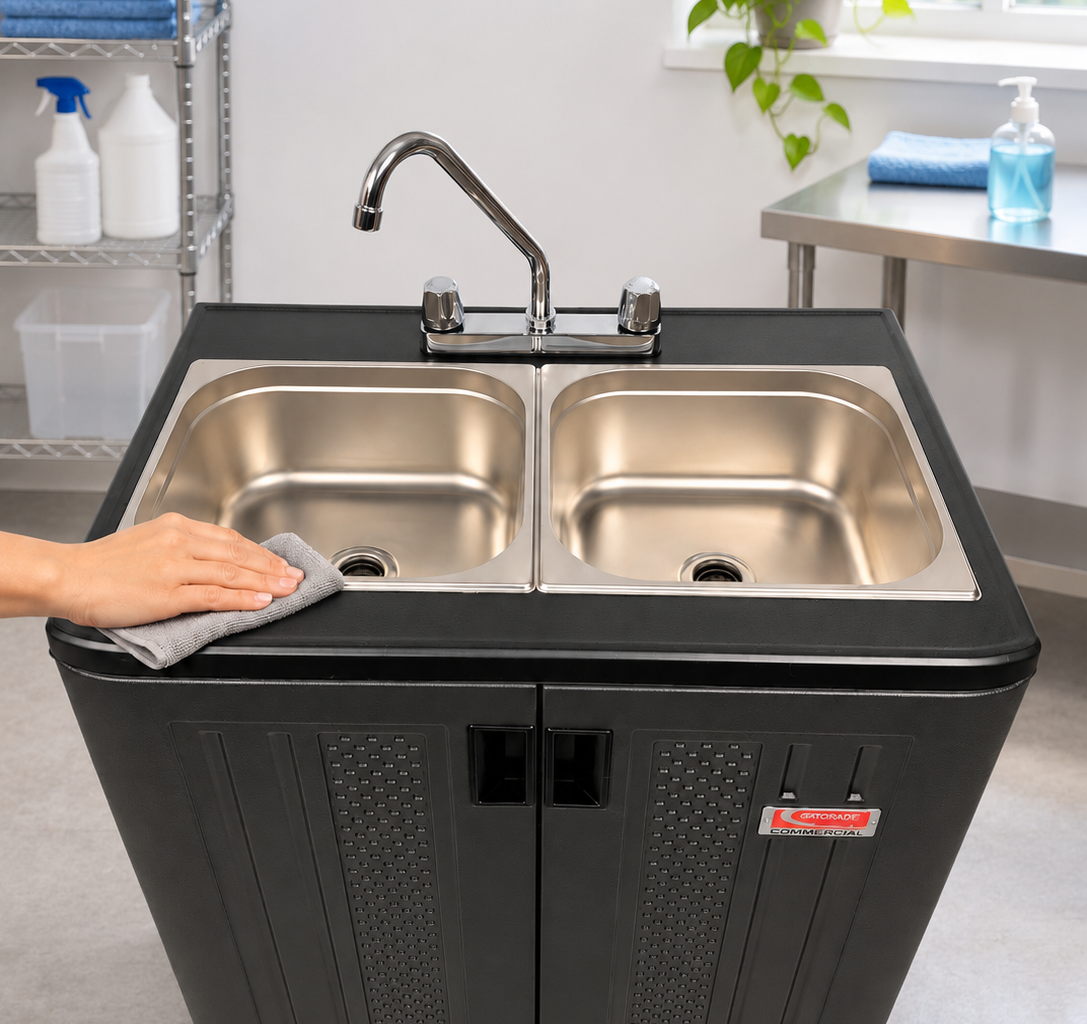
How Do You Clean the Sink Basin and Cabinet?
Use the following cleaning guidelines based on your station's materials:
- Stainless steel basins and cabinets: Clean with mild dish soap, warm water, and a soft cloth or nonabrasive sponge. Avoid steel wool and abrasive scrubbers, which can scratch the finish. Chlorine-based bleach can also cause staining or pitting, particularly if concentrated or left on the surface.
- Heavy-duty resin cabinets and ABS countertops: Use mild soap and water with a soft cloth. Avoid abrasive pads and strong solvents such as acetone or paint thinner, which can dull, discolor, or damage resin and ABS surfaces.
- Laminate cabinets and doors: Wipe with a lightly damp cloth and mild detergent. Avoid excessive water around seams and edges, where moisture can penetrate and cause swelling or deterioration.
To clean the sink and cabinet:
- Prepare the equipment. Unplug the station before cleaning. Keep water and cleaning solutions away from electrical components.
- Clean the basin and faucet. Remove soap residue and dirt using a cleaner appropriate for the surface. Pay attention to areas around the faucet base and drain where buildup can collect.
- Wipe the countertop and cabinet. Clean handles, cabinet doors, edges, and other frequently touched surfaces using the appropriate cleaning method.
- Rinse and dry. Remove cleaning residue according to the product label and dry surfaces with a soft cloth, particularly around laminate seams.
If sanitizing is required, remove visible dirt and soap residue first. Select a sanitizer labeled for the intended surface and application, and follow its instructions for dilution, contact time, and rinsing or drying. A sanitizer suitable for stainless steel may not be appropriate for the station's resin, ABS, or laminate components.
How Should Freshwater and Wastewater Tanks Be Cleaned?
Our portable handwashing stations include 5-gallon freshwater tanks and separate containers for collecting used water.
Freshwater tanks need to be kept free of contamination, while wastewater tanks require regular cleaning to remove residue and prevent odors.
Freshwater Tank Cleaning
Clean the freshwater tank before extended storage and whenever you notice dirt or residue inside the container.
To clean the tank:
- Empty the tank. Drain any remaining freshwater into a suitable sink or drain.
- Wash the interior. Use clean water and a small amount of mild, unscented dish soap. If the opening allows, gently clean accessible surfaces with a soft, nonabrasive brush reserved for freshwater equipment.
- Rinse thoroughly. Rinse the container several times with potable water until no soap residue or suds remain.
- Sanitize when needed. If contamination is suspected or after extended storage, apply a sanitizer labeled for potable-water storage containers to the tank's accessible interior surfaces. Allow the required contact time, then drain and rinse according to the product label.
- Prepare for storage. Allow the tank to drain and dry before extended storage.
Avoid touching the inside of the tank or its fittings with unclean hands or equipment. Do not circulate dish soap, sanitizers, or other cleaning chemicals through the pump, hoses, or water heater unless the procedure is specifically approved for those components.
Wastewater Tank Cleaning
Wastewater containers collect used water, soap residue, and other debris that can cause unpleasant odors if allowed to accumulate.
To clean the holding tank:
- Empty the wastewater tank. Dispose of collected water at an approved sanitary disposal location, never onto the ground or into storm drains.
- Wash away residue. Add clean water and a small amount of mild dish detergent. Gently scrub accessible interior surfaces with a soft brush dedicated to wastewater cleaning. Avoid abrasive cleaners and strong solvents that could damage the container or its seals.
- Rinse thoroughly. Remove loosened residue and detergent with clean water, then empty the rinse water into an approved sanitary disposal location.
- Inspect and dry. Check the container for cracks, leaks, or damaged fittings. Allow it to drain and dry before extended storage.
What Maintenance Do the Pump, Hoses, and Drainage System Need?
An electric pump supplies freshwater to the faucet, while separate drain plumbing directs used water into the wastewater tank.
Routine maintenance primarily involves inspecting accessible components for signs of wear or operational problems.
Pay attention to:
- Pump operation: Listen for unusual noises or unexpected cycling.
- Water connections: Check accessible fittings and hoses for leaks or damage.
- Drainage: Remove visible debris from the basin drain or removable strainer where equipped.
- Water flow: If water pressure drops or the faucet sputters, check for kinked supply hoses, mineral buildup in removable faucet aerators, clogged filters (where equipped), or trapped air in the water lines after refilling the tank.
If problems persist, consult the product documentation before attempting repairs. Disconnect power before any permitted maintenance involving electrical or internal components, and leave electrical repairs to qualified personnel.
How Should You Maintain a Portable Sink With a Water Heater?
Heated portable handwashing stations require additional precautions because their water heaters operate alongside the pump and plumbing system.
Our heated resin-cabinet models, including Models 35-0090, 35-0092, 35-0105, and 35-0202, use 2.5-gallon electric storage heaters. Premier and Pinnacle handwashing stations use Stiebel Eltron point-of-use heaters. These heater systems have different maintenance requirements, so inspection, cleaning, and servicing procedures must be appropriate for the heater installed in each station.
For heated units:
- Disconnect power first. Unplug the station and allow the water heater to cool before performing maintenance.
- Inspect the heater area. Check accessible heater fittings and surrounding surfaces for moisture, dripping water, or water stains that could indicate a leak.
- Check the heater inlet filter. On units equipped with Stiebel Eltron Mini heaters, the inlet filter screen may also require periodic cleaning. Follow the installed heater's servicing instructions before cleaning the screen.
- Check servicing requirements. Review the installed heater's operating instructions before attempting flushing or descaling, as procedures vary by heater type.
- Address persistent problems. Have heating failures or electrical faults evaluated by qualified service personnel.
Our cold-water Model 35-0091 does not include an onboard water heater and therefore does not require heater-specific maintenance.
What Should You Check if the Station Stops Working Properly?
Some operating problems can be traced to the water supply, drainage, or electrical connection.
Before attempting repairs, check for these common conditions:
|
Problem |
Initial Checks |
|
Little or no water from the faucet |
Check the freshwater level, inspect supply hoses for kinks or loose connections, and check whether the pump requires priming. |
|
Slow drainage |
Check the basin drain and removable strainer, if equipped, for debris. Inspect the wastewater hose for kinks or bends that could restrict drainage. |
|
Water leaking inside the cabinet |
Stop using the station and disconnect electrical power before inspecting accessible hoses, fittings, and tank connections for leaks. |
|
Heated water unavailable |
Check that the station has electrical power and that water is flowing normally. If the heater has user-accessible temperature controls, verify their settings. |
If these basic checks do not resolve the issue, stop using the station and refer to the applicable operating instructions. Electrical faults and internal water-heater repairs should be handled by qualified service personnel.
Do not bypass electrical safety devices or modify internal components to restore operation.
How Do You Store or Winterize a Portable Hand Washing Station?
Before extended storage, disconnect electrical power, allow heated components to cool, and empty and clean both the freshwater and wastewater tanks.
If freezing temperatures are possible, remove remaining water from the hoses, pump, and water heater (if equipped). Emptying the tanks alone may leave water trapped in these components. Drain accessible water lines into a suitable container. If water cannot be fully removed, keep the station protected from freezing to prevent damage.
Do not introduce antifreeze or other winterizing chemicals unless they are specifically approved for the system.
Store the station in a clean, dry location. Before returning the equipment to service, inspect hoses and connections, refill the freshwater tank with potable water, and check for leaks.
Purge trapped air from the water lines on all models. With the freshwater tank filled and the pump operating, run the faucet until water flows steadily without sputtering. Trapped air can cause weak or interrupted water flow, particularly after the system has been drained or refilled. For heated models, ensure that the hot water lines are filled with water before plugging in and turning on the hot water heater.
Keep Your Portable Handwashing Station Ready for Use
When selecting a station, consider how easily staff can access the freshwater and wastewater tanks for routine servicing.
Compare our portable hand washing stations by basin design, cabinet material, and water-heating configuration to find a model suited to your operation.