
Your Essential Guide to Safely Loading a Motorcycle with a Ramp
Posted by The USA Trailer on Feb 11th 2026
Loading a motorcycle onto a utility, enclosed, or specialized motorcycle trailer is an important skill for riders who want to travel, race, or perform maintenance. One misstep can lead to accidents, injuries, or expensive repairs. Whether you’re a new motorcycle owner or a seasoned enthusiast, understanding how to select and use the proper loading ramp is key to keeping you and your motorcycle safe when using motorcycle trailers.
This guide covers how to choose the right ramp, best practices for loading and unloading, safety tips, and answers to frequently asked questions. You’ll also find a helpful comparison table to match your bike and motorcycle trailer with the ideal ramp type.
Why Use a Multi-Purpose Motorcycle Ramp?
Lifting a bike into a trailer without a ramp isn’t just difficult, it’s risky. Motorcycle ramps are specifically engineered for bikes, offering:
- Traction for safety
- Proper width for stability
- Reliable load ratings for all types of motorcycles
- Secure, reliable attachment points
Avoid makeshift ramps like basic boards or car ramps; they can snap or slip, putting you, your helper, and your bike at risk, especially when loading onto motorcycle trailers. A quality ramp is a valuable investment for your safety and your motorcycle’s protection.
Key Factors When Choosing a Motorcycle Ramp
1. Match Ramp to Motorcycle Type
- Small Dirt Bikes (<300 lbs): Lightweight, narrow ramps; a single runner is often enough for small tires.
- Mid-weight Standards/ADVs (400–550 lbs): Opt for a full-width straight ramp with at least 600–800 lb capacity to allow steady foot-planting while loading.
- Heavy Cruisers & Touring Bikes (600–900+ lbs): A full-width 5-foot ramp follows the 3x height rule for a standard 20-inch rise. Ensure the undercarriage has enough ground clearance to clear the trailer edge during the transition. Use a longer ramp if you foresee an issue.
- Choppers/Baggers (650–1000 lbs, Extended Wheelbase): Extra-long, arched ramps minimize the breakover angle.
Wheelbase and ground clearance matter as much as weight: long, low bikes can scrape or get stuck underneath on short, straight ramps when loading onto a motorcycle trailer.
2. Determining Your Ideal Ramp Length
The safety of your loading angle is determined by the relationship between your trailer’s height and the ramp's length. For consumer trailers with deck heights between 15 and 20 inches, use the following logic to determine your setup:
- The "3x Height" Rule: For a safe loading angle, your ramp should be roughly three times the vertical rise of your trailer.
- Identify the "Sweet Spot": Engineers recommend an ideal loading angle between 18° and 22° for most standard applications.
- Calculate the Length: A 16-inch rise requires a 4–5 foot ramp , while a 20-inch rise is best served by a 6–8 foot ramp.
- Maximize Stability: Whenever possible, use the longest ramp your space allows. A shallower angle (12°–15°) provides better ground clearance and prevents the motorcycle from "bottoming out" as it enters the motorcycle trailer.
3. Ramp Formats and Materials
Ramp Types:
- Full-width Ramps: Safer for heavy bikes, allow you to walk beside the motorcycle or ride up
- Single-runner Ramps: Ideal for lighter bikes, portable, but may require a separate walking plank. Never ride up a single ramp.
- Curved/Arched Ramps: Designed to prevent scraping on long or low motorcycles by reducing the break-over angle.
- Wide Curved Ramps: Recommended for heavy and low motorcycles, combining added width for stability with a curved profile to reduce the risk of scraping.
Materials:
- Aluminum: Lightweight, corrosion-resistant, easy to handle.
- Steel: Strong, heavier, and best for permanent setups.
- Composites: Light and have good grip, suitable for certain load ranges.
Specialized Low-Profile Solutions: The Alpha Sport
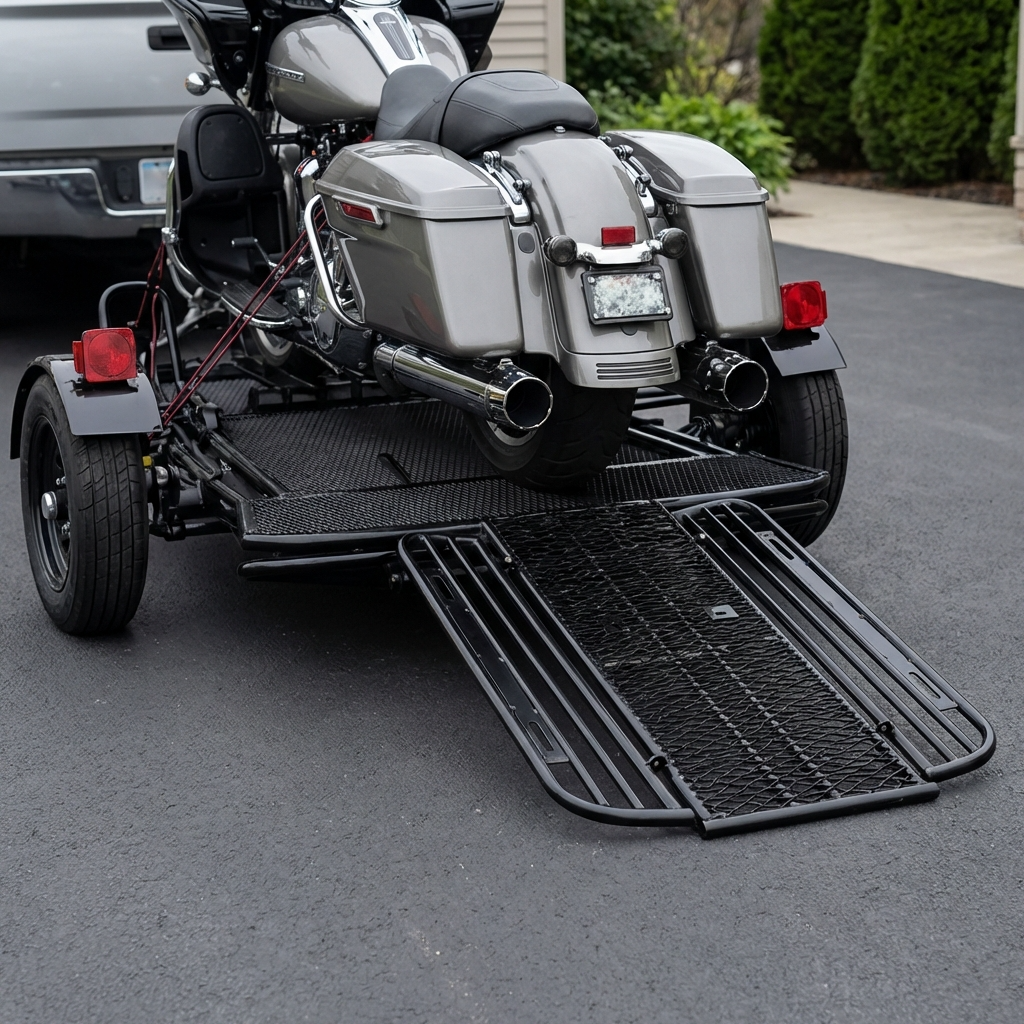
While choosing the right ramp is essential for standard trailers, choosing a trailer designed for loading can simplify the entire process. The Alpha Sport ride-up trailer is engineered with a specialized "squat" feature that lowers the rear of the trailer during loading.
When loading the Alpha Sport, the trailer’s suspension compresses under the weight of the motorcycle as it transitions from the 41″ ramp onto the deck, effectively lowering the deck during the loading process. This temporary compression reduces the ramp-to-deck transition point, helping prevent frame or exhaust contact when loading low-clearance bikes. With the trailer’s already low 13″ deck height, this feature creates a more gradual, rider-friendly path onto the trailer.
Safe Loading and Unloading Techniques
Accidents can be prevented by using proper equipment and following safety steps and ramp manufacturer instructions.
1. Preparation
- Park on a level, stable surface (concrete or asphalt).
- Back up to a curb or an incline when possible to decrease the ramp angle.
- The ramp must be secured using two straps or chains, one on each side, attached to solid points on the trailer. Never rely on gravity alone when loading a motorcycle trailer.
Common Mistakes:
- Loading at too steep an angle (use a longer ramp or lower the surface).
- Failing to secure the ramp with two straps or chains, which can allow the ramp to twist or detach from one side during loading.
2. Loading
- Get Help When Needed: A motorcycle can be loaded by one person, but having someone nearby to steady the bike can make the process safer, especially with heavier motorcycles or narrow ramps.
- Stand Beside the Motorcycle: Walking the bike up the ramp works well for lighter or mid-weight motorcycles. With larger bikes, it can be hard to stop the bike if it starts to lean while being guided up the ramp.
- Riding Up Is an Option: Riding the motorcycle up the ramp keeps the bike centered and may suit heavier motorcycles. This should only be done with a long, wide, securely attached ramp and by riders confident in clutch and throttle control.
- Maintain Steady Momentum: Move slowly and smoothly, and avoid stopping partway up the ramp to help keep the motorcycle balanced.
3. Securing the Motorcycle
- . Use tie-downs equipped with closed-hook or other locking clasps to prevent disengagement.
- Soft straps or loops protect your motorcycle’s finish and absorb vibration.
- Position the front wheel in a wheel chock, such as the Talon Chock, to keep the motorcycle upright and prevent forward or side-to-side movement while securing it.
- Cross the straps in an X-pattern – attach at the rear and angle down at 45 degrees and toward the front. Then attach at the front and angle down at 45 degrees and toward the rear.
- Compress the front suspension for tension and snug the rear to prevent shifting.
- Double-check all straps before travel.
Motorcycle and Ramp Comparison Table
|
Motorcycle Type |
Typical Weight |
Recommended Ramp Type |
Notes |
|
Dirt, Trail, MX Bike |
<300 lbs |
Single Runner |
Lightweight and easy to store |
|
Standard/ADV (midweight) |
400–550 lbs |
Full-Width |
Allows for steady foot-planting |
|
Heavy Cruiser/Touring |
600–950 lbs |
Full-Width |
Maximum stability and control |
|
Custom Chopper/Baggers |
650–1000 lbs |
Full-Width |
Secure base for wide-set bikes |
Product Features and Maintenance
Important Features:
- Anti-slip surfaces for safe loading in wet or muddy conditions
- Folding or compact design, especially for full-width ramps
- Wide ramps provide safer footing and easier balancing.
- Clear weight ratings that exceed your motorcycle’s loaded weight
Maintenance:
- Inspect for cracks, rust, or loose parts before each use
- Store ramps off damp ground and clean after exposure to salt or mud
- Use wall-mount storage to keep ramps organized and safe
Additional Safety Tips
- Use only closed hooks or clips for tie-downs
- Always secure the front wheel to prevent it turning during transit
- Plan for weather; select ramps with aggressive tread if loading in the rain or mud
- Use only engineered, load-rated ramps specifically tested for motorcycle weights; avoid using improvised or modified structures.
Frequently Asked Questions
Q: Is it safer to walk or ride a motorcycle up a ramp?
A: It depends on the motorcycle, ramp setup, and rider experience. For confident riders, riding up can be an option for larger bikes on wide, securely attached ramps, while walking the bike up works well for lighter or mid-weight motorcycles.
Q: Do I need a separate ramp for my motorcycle and ATV?
A: Many full-width ramps support both, provided weight and width requirements are met. Always confirm specifications before use.
Q: Can I use car ramps or a wooden board to load my motorcycle?
A: No. Car ramps and basic planks lack traction, proper attachment, and may not support moving loads. Only use purpose-built motorcycle ramps.
Q: How should I store my loading ramp?
A: Fold and secure ramps in your vehicle or mount them on a garage wall. Don’t leave them loose, as they can move dangerously during transport.
Q: What if I have to load in bad weather or on dirt?
A: Opt for ramps with aggressive, anti-slip surfaces. Move slowly, use a helper, and ensure all anchors and straps are secure.
Q: How do arched ramps help long and low bikes?
A: Arched ramps create a gentler, smoother transition at the apex, preventing long or low motorcycles from scraping.
Most Common Loading Mistakes (and How to Avoid Them)
- Steep ramp angles-use a longer ramp or lower surface
- Not securing the ramp-always use straps or chains
- Riding up without experience-walk the bike up with help instead
- Not considering your reach or bike height-practice the movement first
- Using open-ended tie-downs-use safety-latch hooks or locking carabiners.
- Ignoring soft straps-use them to protect your paint and absorb vibration
- Incorrect tie-down points-follow manufacturer recommendations and pad sharp corners
- Not securing the front wheel-use a chock
- Only securing the front-always tie down both the front and rear
Loading Motorcycles Into Pickup Trucks: Additional Considerations
While this guide focuses on loading motorcycles onto trailers, some riders choose to load motorcycles into the back of a pickup truck. This method requires considerable care and careful planning.
Pickup truck beds are higher off the ground, which increases the ramp angle and raises the risk of loss of balance, ramp movement, or sudden acceleration. These risks are greater with larger or heavier motorcycles.
Riders considering pickup truck loading should evaluate ramp length, width, and attachment points carefully, and use ramps or loading systems designed specifically for this purpose. There are companies that offer equipment built to address these challenges.
Improper setup or technique can lead to damage or injury, so understanding the risks and using appropriate equipment is essential before attempting to load a motorcycle into a pickup truck.
Conclusion: Find the Right Ramp at The USA Trailer Store
A purpose-built motorcycle loading ramp is essential for your safety and your bike’s protection. By choosing the appropriate ramp for your bike and trailer, following best practices, and regularly maintaining your gear, you can make loading and unloading easy, safe, and reliable every time.
Ready to make motorcycle loading safer and easier? Explore The USA Trailer Store’s selection of top-quality motorcycle ramps, including lightweight folding aluminum models, heavy-duty full-width options, and arched ramps for low or long motorcycles. Find the equipment that matches your motorcycle and trailer combination, and invest in safety, convenience, and peace of mind.